Choosing a shower door isn’t just about what looks sleek in a showroom. It comes down to how your bathroom functions every day: how much floor space you have to spare, how wide you need the opening to be, and how much time you want to spend cleaning it.
Whether you are fitting a shower into a small bathroom or replacing an old bathtub with a full enclosure in a family bathroom, here is how every popular type of shower door compares.
What Is the Difference Between a Shower Door, a Shower Enclosure and a Shower Screen?
A shower door is the moving panel that lets you step in and out. It can be fitted on its own across a three-walled alcove to enclose a small nook, or an integral part of your shower enclosure set-up.
A shower enclosure is the whole structure around the showering space: the door, any fixed side panels and usually the tray. A shower screen is a fixed or hinged glass panel, often used over alcove or as a walk-in panel. So every shower door is part of an enclosure, but not every enclosure needs a door.
What Are the Main Types of Shower Doors?
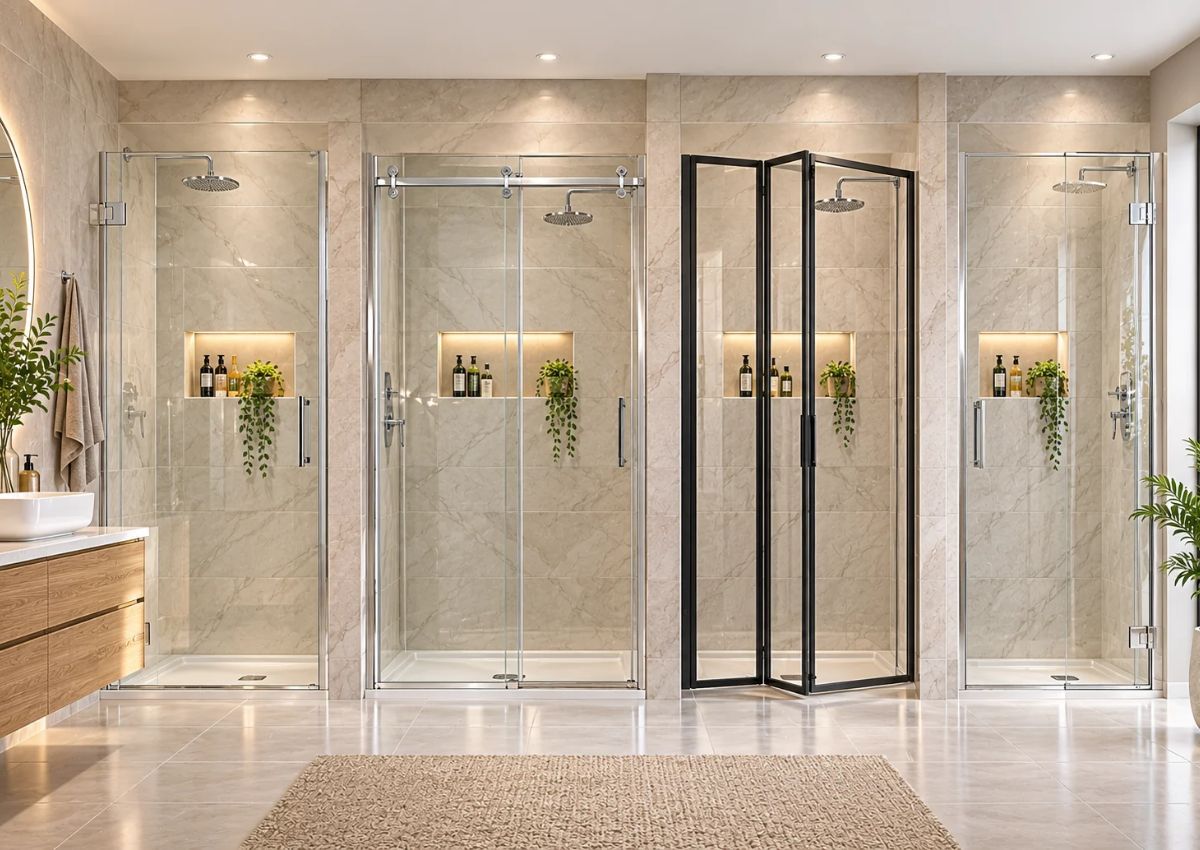
A shower door is the glass panel, usually made from toughened safety glass, fitted to a shower enclosure or tray. Its job is simple: keep water inside the shower while giving you easy access to step in and out. In the UK, you will often hear people refer to them as shower cubicle doors or shower screens, although a screen is technically a fixed panel without moving parts. The six styles most UK homeowners choose between are:
Hinged shower doors
A popular choice, suitable for most spaces, these swing open on side hinges, just like a bedroom door.
How Do Hinged Shower Doors Work?
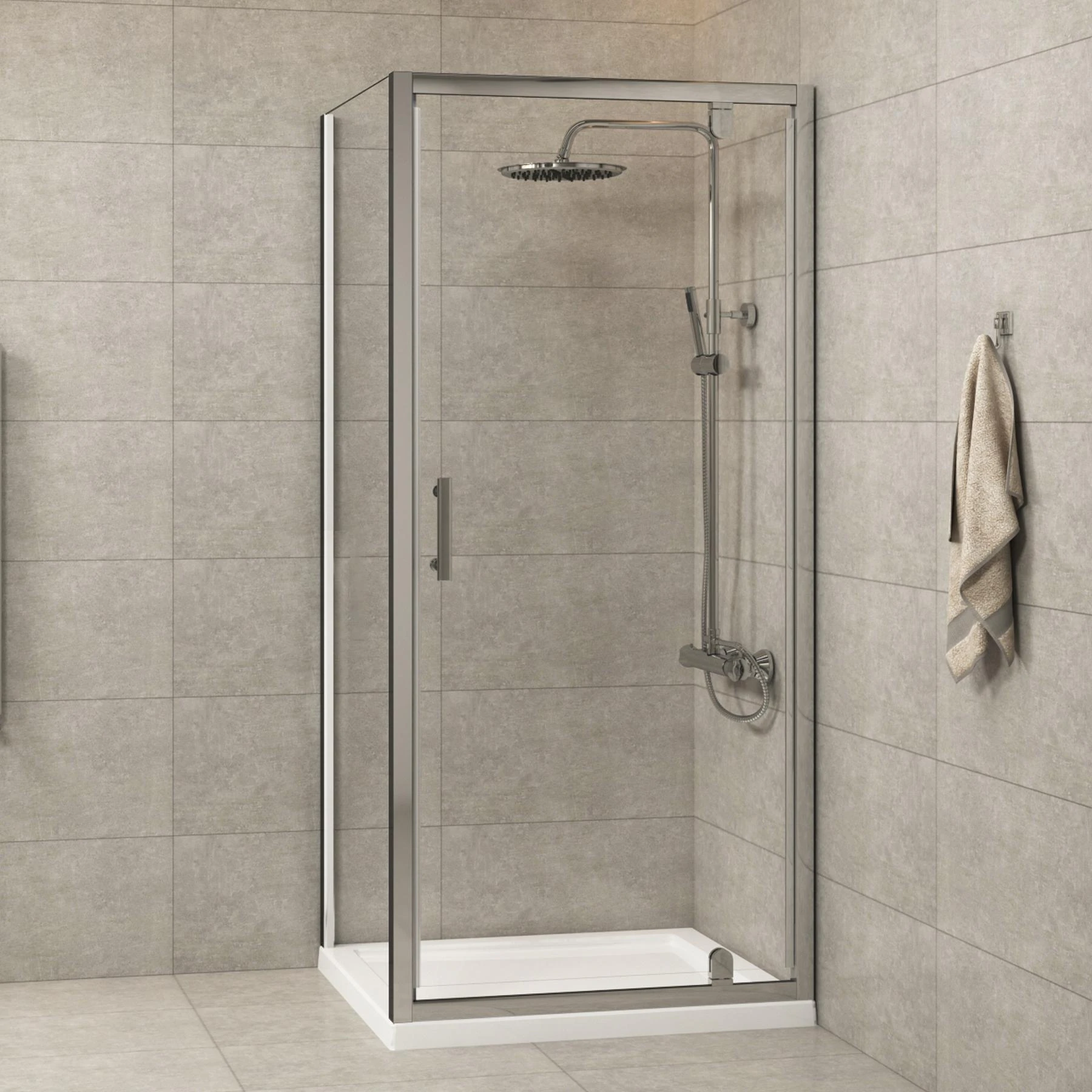
A hinged shower door swings outwards on hinges fixed to the glass side panel (in the case of a shower enclosure) or the wall (in the case of an alcove). One of the simplest and most reliable choices, it is perfect for easy access and a wide opening.
Hinged doors are often preferred for alcove (recess) showers and bathrooms with clear floor space in front of the shower. They are typically available in widths from 700mm to 900mm.
The pros include wide access, fewer moving parts compared to sliding and bifold shower doors, less cleaning required as there is no sliding track to clean, and availability in reversible left- and right-hand opening options.
The cons include requiring swing clearance roughly equal to the door width, meaning the door can clash with a toilet, basin or radiator, especially in small bathrooms.
Pivot shower doors
Similar opening and closing mechanism, but these rotate on pivot points at the top and bottom of the door.
How Do Pivot Shower Doors Work?
Pivot shower doors turn on pivot points fixed at the top and bottom of the door rather than on wall-mounted hinges. The pivot sits slightly in from one edge, so part of the door swings inwards while the rest swings outwards, which means less clearance may be needed outside the shower than for a hinged door.
They give a sturdy, classic look, and many models are dual-action, opening both inwards and outwards. A pivot shower door is best for alcove showers where you want a traditional, solid feel.
The pros include a strong build, smooth movement and a good seal when closed. The cons are that it requires some swing room (less than a hinged door in many designs), and the pivot hardware must be set up accurately during fitting.
Sliding shower doors
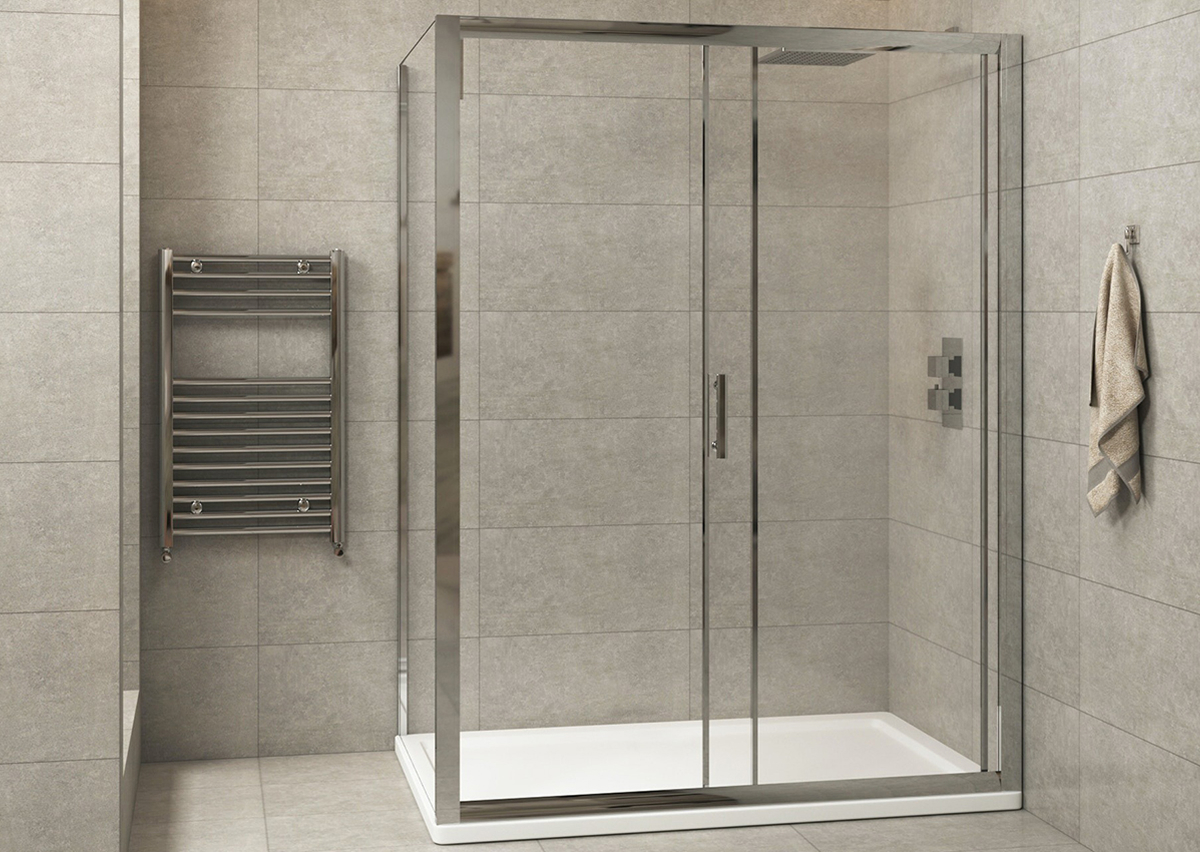
Sliding shower doors glide along a track, so there is no need for door swing space.
How Do Sliding Shower Doors Work?
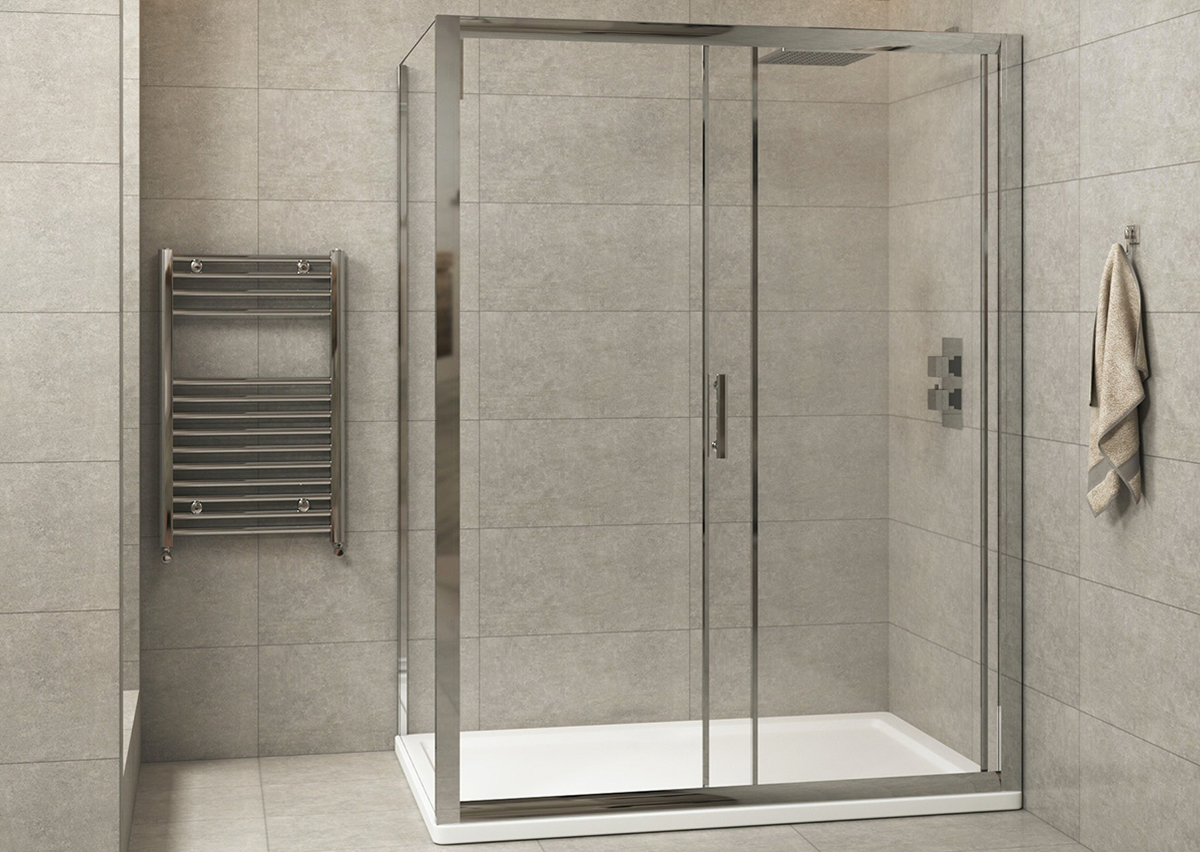
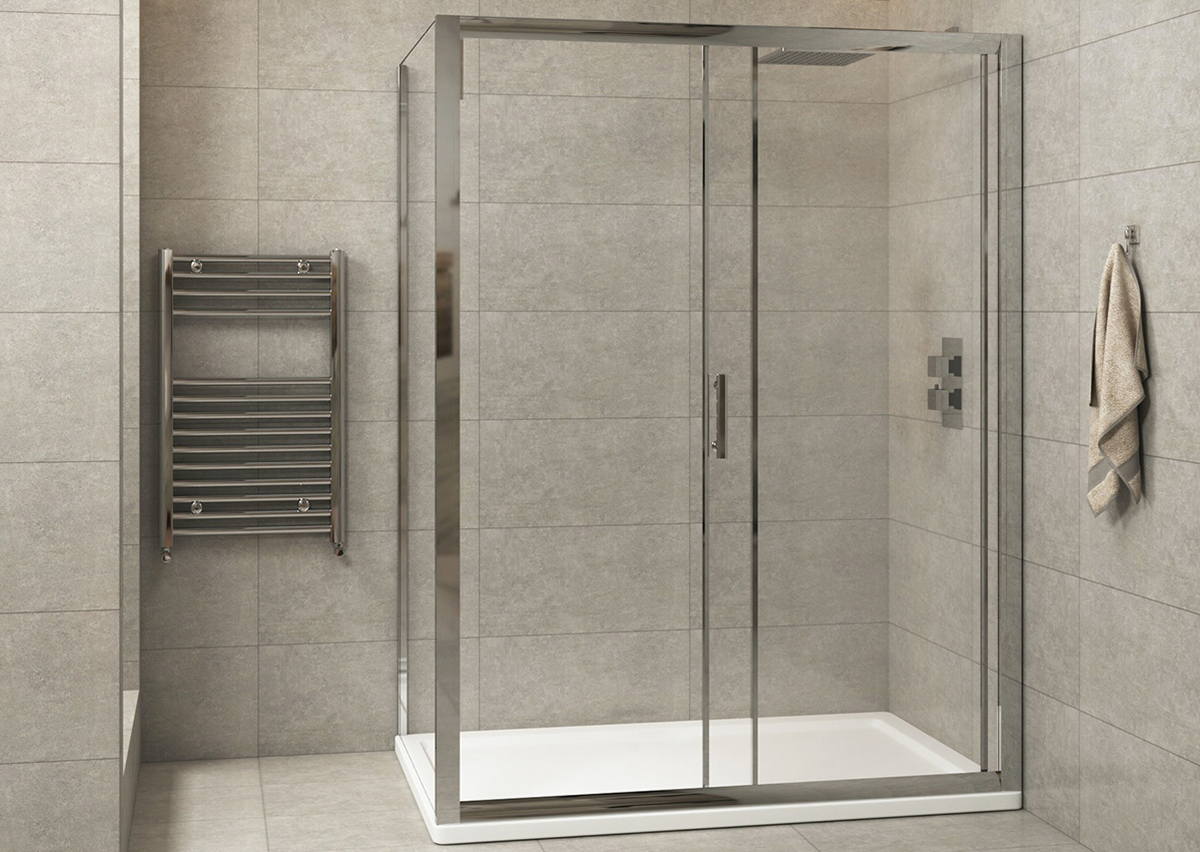
Sliding shower doors have one or two glass panels that glide on rollers along a top and bottom track. Because nothing swings outwards, sliding shower doors are an ideal choice for small bathrooms and are commonly used in quadrant and offset quadrant enclosures.
Sliding shower doors are best for compact bathrooms, ensuites, wider openings and corner or quadrant layouts. They are typically available in sizes ranging from around 1000mm up to 1700mm or more for alcove installations.
The pros include no need for swing space, suitability for wide recesses and good value for money. The cons include only part of the opening being accessible at one time, while the tracks can collect limescale and soap scum if not cleaned regularly.
Bi-fold Shower Doors
Bi-fold shower doors have two panels that fold together to open (see also infold doors below).
How Do Bi-Fold Shower Doors Work?
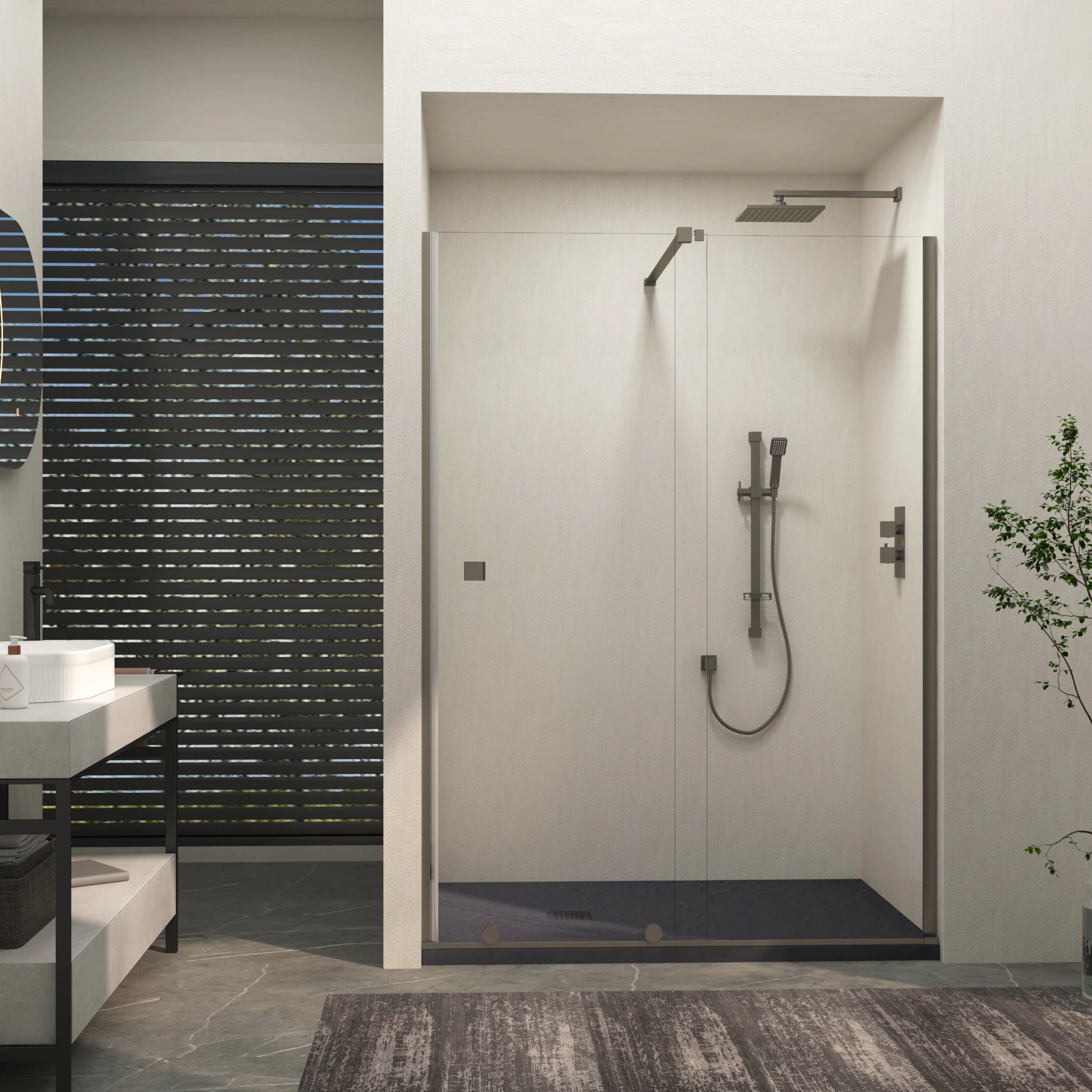
Bi-fold shower doors have two hinged glass panels that fold in on each other as you open them. They need roughly half the clearance of a standard hinged door.
Bi-fold shower doors are best for tight ensuites and small recesses where a hinged door would hit the toilet or basin.
The pros include a compact opening, budget-friendly pricing and the ability to fit door where a hinged one would not. The cons include narrower access, as the folded panels remain within the opening, and extra hinges and seals that need occasional checking.
Types of Shower Doors Compared
The shower doors differ in terms of space needed, where they fit best, and how you want the door to open. Each design has its own advantages and limitations particularly when it comes to access, clearance requirements and everyday cleaning.
|
Door type |
How it opens |
Space needed |
Best for |
Pros |
Cons |
|
Hinged |
Swings outwards on side hinges |
Swing clearance about equal to door width |
Alcoves, larger bathrooms |
Wide access, simple, easy to clean |
Needs floor space, can clash with fittings |
|
Pivot |
Rotates on offset top and bottom pivots |
Less swing clearance than hinged (many open both ways) |
Alcoves, traditional or solid feel |
Sturdy, smooth, good seal |
Needs swing room, precise fitting |
|
Sliding |
Glides along a track/ also available double sliding fitted to quadrant or offset quadrant |
None (no swing) |
Small bathrooms, wide recesses, quadrants |
Space-saving, wide sizes available |
Tracks collect limescale, partial opening |
|
Bi-fold |
Two panels fold together |
About half a hinged door |
Tight ensuites, small recesses |
Compact, budget-friendly |
Narrower access, more hinges |
What Type of Shower Door is Best for Your Bathroom?
The best shower door depends on your space, who uses the shower and how much upkeep you will tolerate.
A hinged door gives the widest opening but needs the most clearance. A pivot door sits slightly in from the edge, so part of it swings inwards and you need less room outside the shower. Choose hinged for large bathrooms and pivot for medium-sized ones, and pick a dual-action pivot door if a basin or toilet is nearby.
Both sliding and bifold shower doors are space-saving options often preferred for medium- to small-sized bathrooms. However, your choice also depends on the shower opening width. The sliding door suits wider openings (1000mm and up), but only about half the width is open at one time. A bi-fold door suits narrower openings (around 700mm to 900mm) and folds out of the way, but the folded panels reduce the clear entry. Sliding wins on width and bi-fold wins on tight, narrow entrances.
|
Your bathroom or requirement |
Recommended shower door |
Why? |
|
Small bathroom or ensuite |
Sliding or bi-fold |
Both avoid the need for outward door swing, saving floor space. |
|
Large family bathroom |
Hinged or pivot |
Offers wider, easier access to the shower. |
|
Modern, minimalist look |
Frameless shower door or walk-in screen |
Creates a clean, open and contemporary appearance. |
|
Older users or limited mobility |
Walk-in screen or wide hinged door with a low-profile tray |
Provides easier access with fewer obstacles. Read our accessible bathroom design guide for seniors |
|
Hard water area |
Frameless or hinged door with an easy-clean coating |
Fewer tracks and hard-to-reach areas can make cleaning easier and reduce limescale build-up. |
|
Low budget |
Framed bi-fold or sliding door |
Often offers better value for money. |
Match The Shower Doors to Your Enclosure Type
This is where many renovators get stuck. Not every shower door style can fit perfectly into your shower area. So, consider your bathroom layout when planning for a shower enclosure.
-
Recess (alcove): walls on both sides and the back, with the door fitted wall to wall. Hinged, pivot, sliding, bi-fold and infold doors all work
-
Corner with a side panel: the door meets a fixed glass shower side panels at the open corner of the shower. Hinged and pivot doors are the usual choice
-
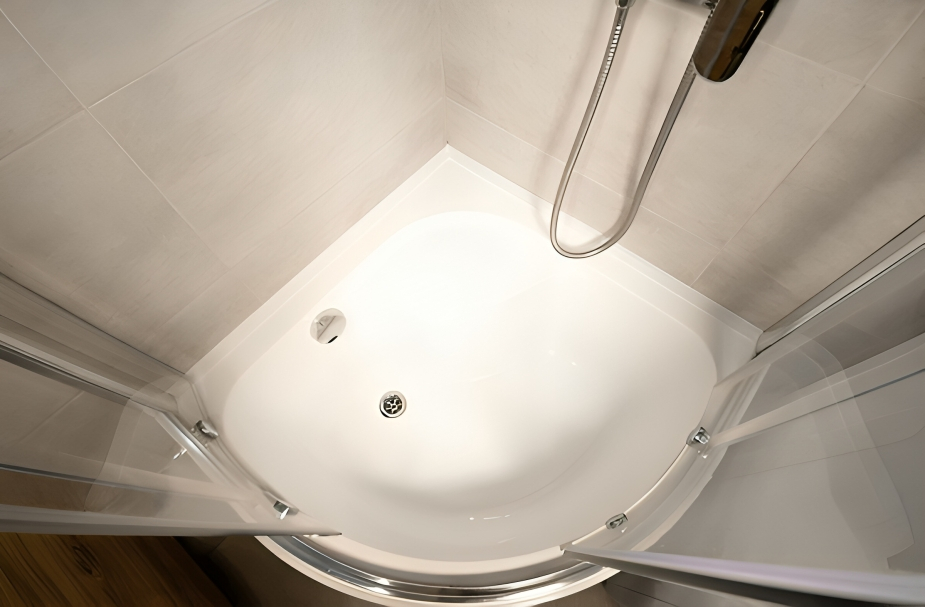
Quadrant and offset quadrant: a curved front that saves floor space in a corner, almost always fitted with sliding doors and a matching quadrant tray
-
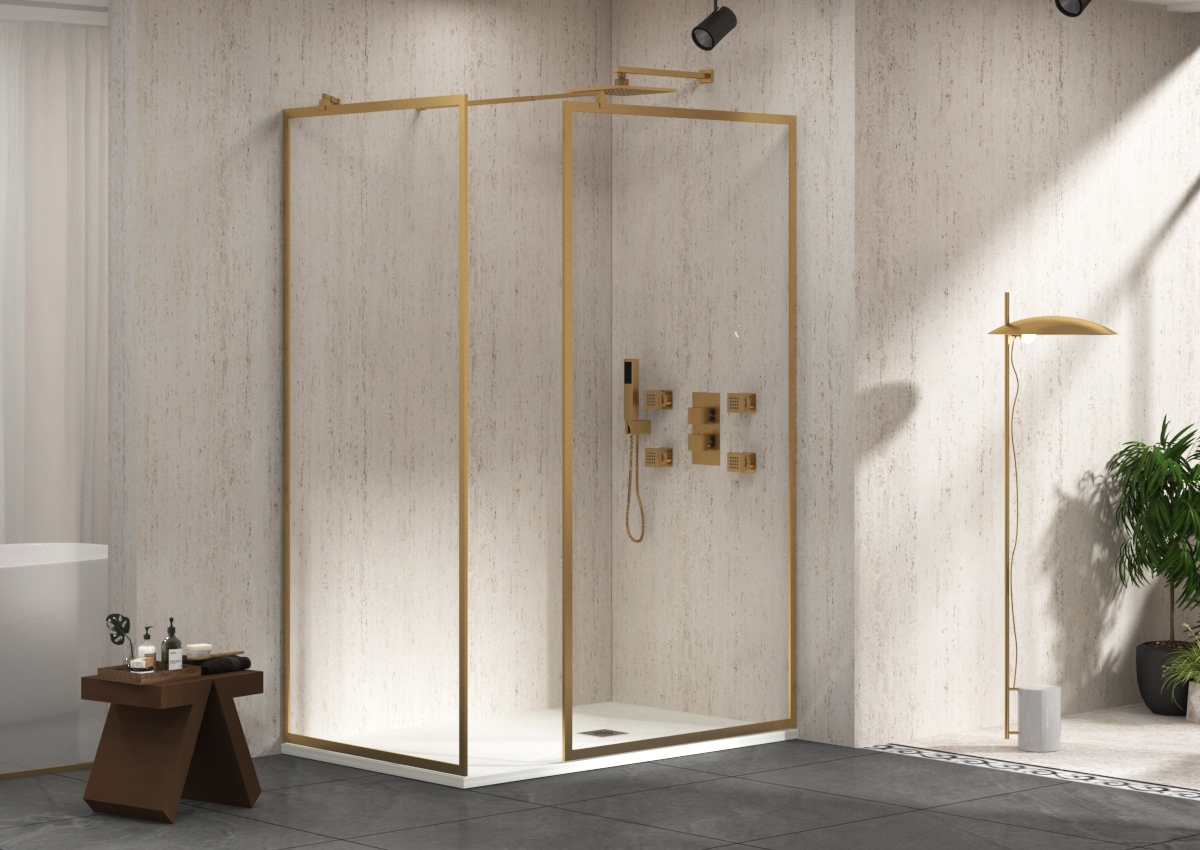
Door plus one or two side panels: a rectangular enclosure where fixed glass panels sit beside the door, handy when the shower stands away from the walls
Which Shower Door Features Are Worth Paying For?
Beyond the door style, a few features change how the door performs year after year:
-
Easy-clean coating: a water-repellent layer that makes water bead and run off, so limescale and soap marks need less scrubbing
-
Protective or anti-limescale coating: helps shield the glass from hard-water minerals, which can cloud untreated glass over time
-
Anti-bacterial coating: an optional extra that helps limit mould and bacteria on the glass surface
-
Magnetic and water seals: hold the door shut and stop water escaping at the edges. All our shower doors at Royal Bathrooms feature magnetic high quality water seals.
-
Soft-close or sprung hinges: let hinged and pivot doors close gently and settle squarely against the seal
-
Quick-release rollers: let you lift a sliding panel off its track to clean the channel and the glass behind it
-
Reversible (universal) handing: lets you fit the door to open left or right, which helps you work around a basin, toilet or radiator
-
Reduced-height options: shorter doors for loft conversions and sloping ceilings, where a standard 1850mm to 2000mm door will not fit
-
Glass versus acrylic: acrylic and PVC panels cost less but scratch more easily and look less premium, so glass remains the standard for lasting results
Beside standard features, you will need to make some important choices when buying a shower door. These choices depend on your bathroom size, layout, personal preference and budget. Some questions naturally emerge in your mind during the buying journey and you will need some information to choose the right option.
What are The Standard Glass Shower Door Sizes
Shower doors come in a variety of sizes usually identified by the height and width of the opening of the shower enclosure/ area. Here are the standard size shower doors in the UK.
|
Shower door type |
Common widths |
Typical height |
|
Hinged shower door |
700, 760, 800, 900, 1,000mm |
1,850mm |
|
Pivot shower door |
700, 760, 800, 900, 1,000mm |
1,850mm |
|
Sliding shower door |
1,000, 1,100, 1,200, 1,400, 1,600mm |
1,850mm |
|
Bi-fold shower door |
700, 760, 800, 900, 1,000mm |
1,850mm |
|
Walk-in shower screen |
700, 800, 900, 1,000, 1,200mm |
1,850mm |
What Size Shower Door Do I Need?
Getting the measurements right is the most important step, because shower door sizes are not one-size-fits-all. If you want to know what shower door size fits best for your space, it is important to know how to measure it. For a full walkthrough, read what size shower enclosure you need.
-
Measure the opening width at the top, middle and bottom, since walls are rarely perfectly straight. Use the smallest figure
-
Measure the height from the top of the shower tray upstand to where you want the glass to finish (most doors are about 1850mm to 2000mm tall)
-
Check the tray size and make sure the door width matches it. Our shower tray buyer’s guide covers sizes and types
-
Decide the opening direction and check nothing blocks the swing (for hinged and pivot doors)
-
Confirm the adjustment range in the product specification, as most doors allow only a small tolerance
What Shower Door Glass Thickness Should I Choose?
When shopping for a shower door, you’ll run into several glass thicknesses. It’s easy to assume thicker automatically means safer and sturdier, but that’s not necessarily true.
Buying a door with more thickness just makes the door heavier and harder to install ( might be a problem if you are planning for DIY installation) . Instead of paying extra for thickness alone, check the product details for a safety mark like BS EN 12150. At Royal Bathrooms, all our shower enclosures, shower doors, and shower panels are BS EN 12150 certified.
Any certified toughened safety glass is already designed with safety in mind: if it ever breaks, it crumbles into small, blunt pellets rather than dangerous, jagged shards.
-
6mm glass: the standard for framed doors and the most budget-friendly
-
8mm glass: a solid mid-range choice for semi-frameless and many frameless doors
-
10mm glass: a premium, heavy-duty option for large frameless panels.
What Shower Door Frame Finish Should I Choose?
Shower door frame finish can play an important role in improving the overall looks of your bathroom. Chrome, matte black and brushed brass are the most popular frame finishes in the UK. Other finishes include brushed bronze and gun metal grey etc.
|
Frame finish |
Appearance and style |
Best suited to |
What to coordinate it with |
|
Chrome |
Bright, polished and timeless |
Traditional and contemporary bathrooms |
Chrome taps, shower fittings, handles and vanity unit hardware |
|
Matte black |
Bold, understated and modern |
Industrial, minimalist and monochrome bathrooms |
Black taps, shower fittings, handles and vanity unit handles |
|
Brushed brass |
Warm, elegant and luxurious |
Contemporary, classic and luxury-inspired bathrooms |
Brushed brass taps, shower fittings, handles and vanity hardware |
|
Brushed bronze |
Rich, warm and slightly darker than brass |
Earthy, traditional and sophisticated bathroom designs |
Bronze taps, accessories and warm-toned vanity finishes |
|
Gunmetal grey |
Dark, muted and contemporary |
Industrial, modern and minimalist bathrooms |
Gunmetal taps, shower fittings and darker vanity hardware |
What Do Most Shower Door Guides Not Tell You?
These lesser-known and often overlooked details cause the most problems after delivery:
-
Toughened glass cannot be cut or drilled. It is toughened as a finished piece, so you cannot trim it on site. Measure carefully and order the right size or adjustment range
-
Measure after the tiling is finished. Tiles and adhesive take several millimetres off the width of the opening, so measuring a bare wall gives you a figure that is too big
-
Edges and corners are the weak spot. Toughened glass is strongest across its face but can fail from a chipped edge. Inspect every panel on delivery, photograph any damage and report it before fitting
-
The glass is heavier than it looks. As a rule of thumb, glass weighs about 2.5kg per square metre for every millimetre of thickness, so an 8mm panel measuring 900mm × 1900mm weighs roughly 34kg. Fix into solid wall, or add noggins behind a stud wall, because plasterboard alone cannot carry it
-
Choose the hinge side or fixed panel to suit the shower head. Hang a hinged door so you can reach the controls without stepping into the spray, and put the fixed panel of a sliding door nearest the shower head so the overlap gap faces away from the water
-
The tray matters as much as the door. Sliding and bi-fold doors run on a guide that sits on the tray upstand, and a poor match can leak. Our shower tray installation guide explains how to get the base right first
-
Seals are replaceable parts. Water seal strips and magnetic seals harden and discolour in hard water over time, so check them regularly and replace them when they stop closing flush
-
Give the silicone time to cure. Follow the cartridge instructions (often around 24 hours) before using the shower
-
Matt black and brushed brass show limescale and marks more easily. Wipe them dry with a soft cloth and avoid abrasive pads and harsh acids that can damage the finish
-
Standard doors are not steam-room doors. A steam shower needs a fully sealed enclosure designed for steam, so do not assume a normal door will cope
Most Common Mistakes When Choosing a Shower Door
Avoiding common mistakes when choosing a shower door can save you time, hassle and money.
-
Measuring only once, or only at one height, and ignoring walls that are out of line
-
Forgetting swing clearance, so a hinged or pivot door hits the toilet, basin or radiator
-
Mismatching the door and tray, which causes gaps and leaks
-
Choosing thin glass for a frameless design, when thicker glass is needed for stability
-
Ignoring hard water, then struggling with limescale on tracks and glass
-
Skipping the safety mark, instead of confirming the glass is toughened
-
Fitting alone, when heavy glass needs two people
-
Rushing the sealing, which leads to leaks and mould around the edges
At Royal Bathrooms, we have a wide choice for shower door types, sizes and finishes. You can browse our shower door collection to find the right style for your bathroom and enjoy fast courier delivery across the UK.
How Much Do Shower Doors Cost in the UK?
Shower door prices vary widely, mainly depending on the door type (bi-fold and basic sliding doors are usually the cheapest, while frameless options are the most expensive), glass thickness and any easy-clean treatment, size, whether the door is sold with side panels or a tray, and the finish and brand.
For a full breakdown, see our guide to how much a shower enclosure costs in the UK.
What Is the Best Way to Clean Glass Shower Doors?
Shower glass is heavy, so always fit it with a helper and follow the manufacturer’s instructions. Most of the time it is a part of the shower enclosure installation. See our shower enclosure installation guide for a complete installation process.
To keep your door looking new:
-
Squeegee the glass after each shower to prevent limescale marks
-
Wipe sliding tracks and rollers regularly
-
Check the water seal strips and magnetic seals for wear
-
Avoid abrasive cleaners that can scratch coatings
-
Ventilate the room to reduce damp, and read our guide on how to identify, remove and prevent bathroom mould
For step-by-step cleaning tips, see how to clean shower glass and our guide to effortlessly cleaning your shower screen.
Why Should You Buy From Us?
We offer a wide choice of shower doors in different styles, sizes, glass thicknesses and finishes, making it easier to find an option that suits your bathroom layout, preferences and budget. Moreover, we offer
-
A wide catalog of over 1,000 bathroom products
-
Free UK delivery
-
365-day exchange policy
-
Lifetime Guarantee
Whether you need a glass door for shower recesses, corner enclosures or a bath, you can compare sizes and finishes in our shower doors range.
Conclusion:
Choosing the right shower door comes down to finding a balance between your bathroom layout, available space, ease of access and budget. Hinged and pivot doors offer wider access, while sliding and bi-fold designs are practical choices for bathrooms where space is limited.
Consider the enclosure configuration, glass thickness, frame finish and essential features before making your final decision. Most importantly, measure your shower opening carefully and check compatibility with your shower tray to avoid fitting problems. Once you know what works best for your space, explore the Royal Bathrooms shower door collection to compare different styles, sizes and finishes and find the right option for your bathroom.
FAQs
What are the different types of shower doors?
The most popular shower enclosure door types in the UK are hinged, pivot, sliding, and bifold. Hinged and pivot doors are similar in terms of opening and closing mechanism, as they swing open. Sliding shower doors, on the other hand, glide on a track; bi-fold doors fold in half, and frameless doors use thick glass with minimal framing.
Which type of shower door is best for a small bathroom?
When it comes to a small bathroom, you need a shower door that does not require clearance when opening. Therefore, sliding and bifold doors are often recommended for small spaces. These doors require no or little swing space. A quadrant enclosure with sliding doors also saves floor space in a corner.
Which shower doors are the easiest to clean?
Hinged or pivot doors with an easy-clean coating are the easiest to maintain, as they have no tracks. Sliding doors need their tracks cleaned regularly, particularly in hard water areas.
What glass thickness is best for a shower door?
Six millimetre toughened glass is standard for framed doors, 8mm suits most frameless and semi-frameless designs, and 10mm is a premium choice for large panels. Always check the glass is toughened safety glass with a recognised safety mark.
How much space does a hinged shower door need?
A hinged shower door needs clear floor space roughly equal to its width, typically 700mm to 900mm in front of the enclosure. If you do not have that room, choose a sliding or bi-fold door instead.
Can I replace just the shower door and keep my tray?
Yes, as long as the new door suits the size of your existing tray and opening. Measure the opening at the top, middle and bottom, and check the adjustment range in the product details.
How long do shower doors last?
A good quality shower door can last 10 years or more with regular cleaning and care. Seals, rollers and hinges may wear sooner and are usually easy to replace, so check them from time to time.