With so many different types of baths available, finding the right one can be confusing. In this guide, we'll walk you through the main bath types, shapes, materials and styles, helping you understand the key differences before you decide which option is right for your home.
Bath types
There are several different types of baths on the market, each built for a different type of bathroom or purpose. Here's a look at the main types:
Straight baths
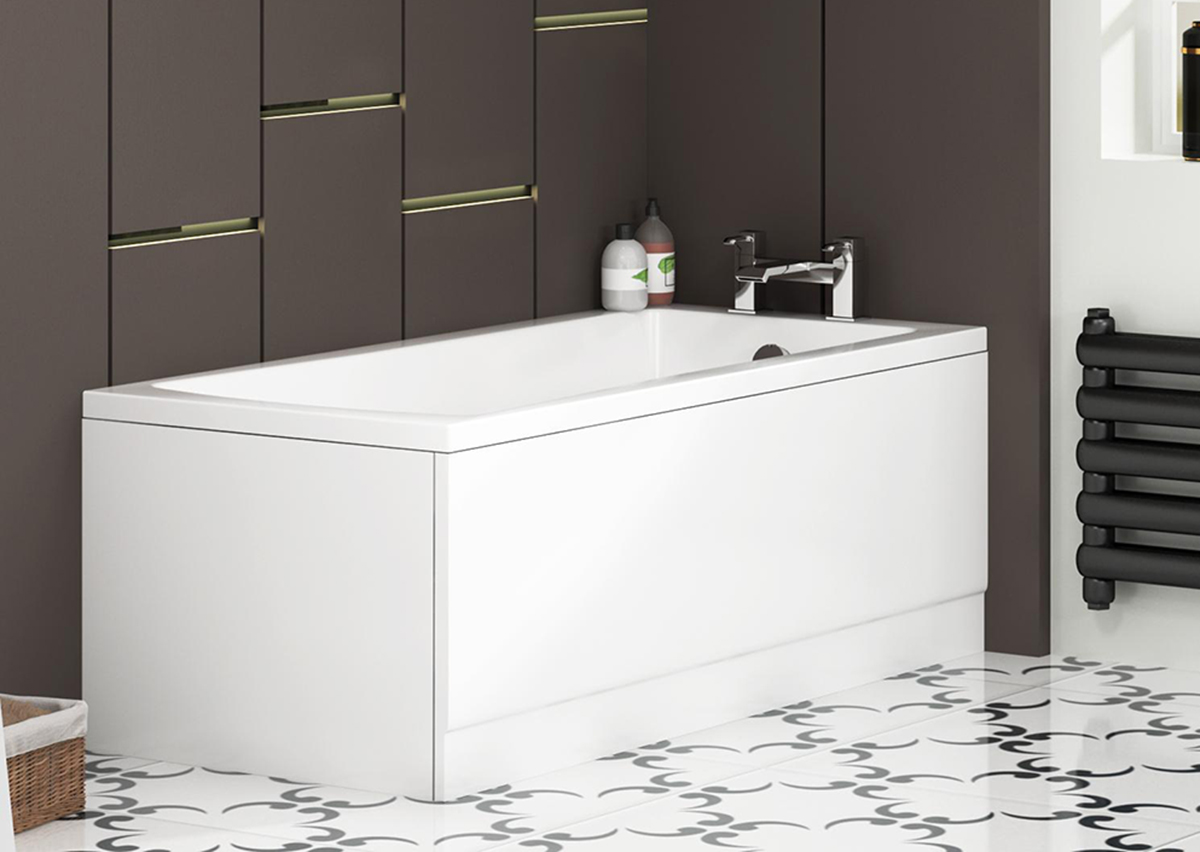
Also known as alcove baths, straight baths are rectangular tubs that sit flush against three walls. They're the most common bath shape in the UK, largely because they fit almost any layout and cost less to install than a curved or freestanding design. Straight baths come in single and double-ended options.
Single-ended baths
A single-ended bath has the taps and waste positioned at one end, with a sloped backrest at the other. This design uses space efficiently and suits smaller bathrooms, since the flat end can sit against a wall or shower screen.
Double-ended baths
Double-ended baths have the waste in the centre and a sloped backrest at both ends, so two people can bathe comfortably facing each other. Due to their shape, they tend to sit a little further from the wall, so they suit slightly larger bathrooms.
Learn more about the difference between the two in our guide to single vs double-ended baths.
Shower baths
A shower bath combines a bath and a standing shower in one unit, making it the practical choice when a bathroom can't fit both fixtures separately. They feature a wider end with a flatter base for stable footing, plus a shower screen to keep splashes contained. Shower baths come in two main shapes: L-shaped and P-shaped.
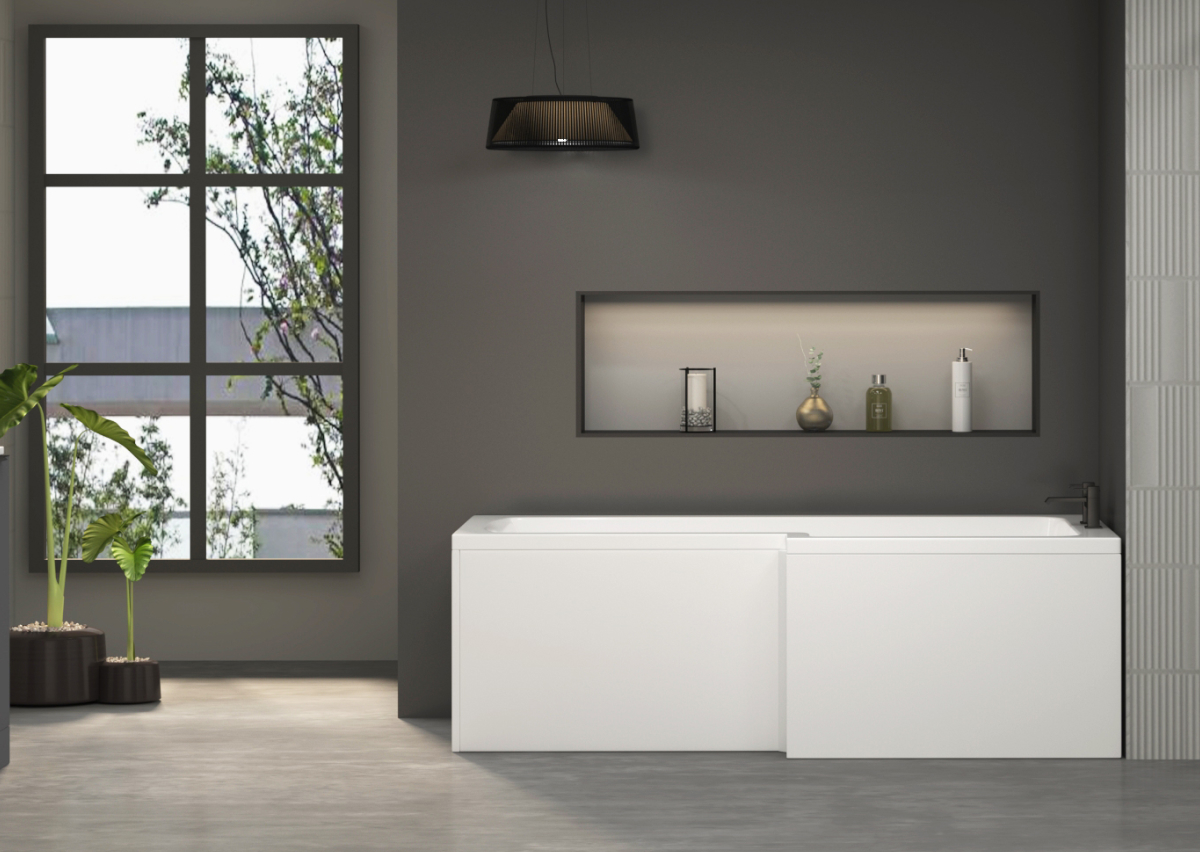
L-shaped shower baths
An L-shaped shower bath widens at one end to create a proper standing area, forming an angular L profile. This gives noticeably more elbow room than a straight shower bath while still fitting a standard bathroom footprint.
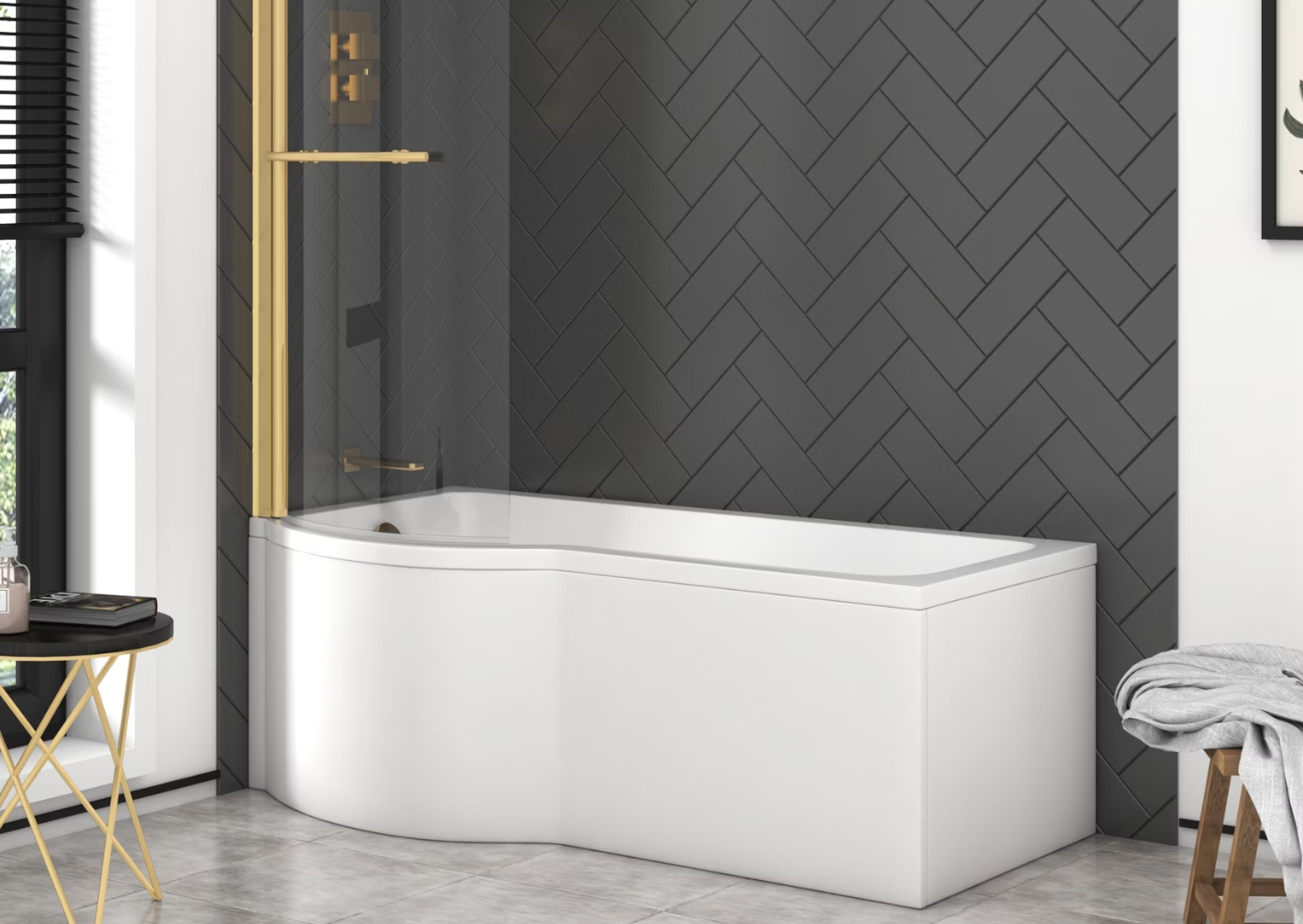
P-shaped shower baths
A P-shaped shower bath follows a similar idea to the L-shape, but with a curved rather than angular showering end. The rounded profile pairs with a curved screen for a softer look, and many people find the extra curve gives a slightly roomier feel underfoot.

Corner baths
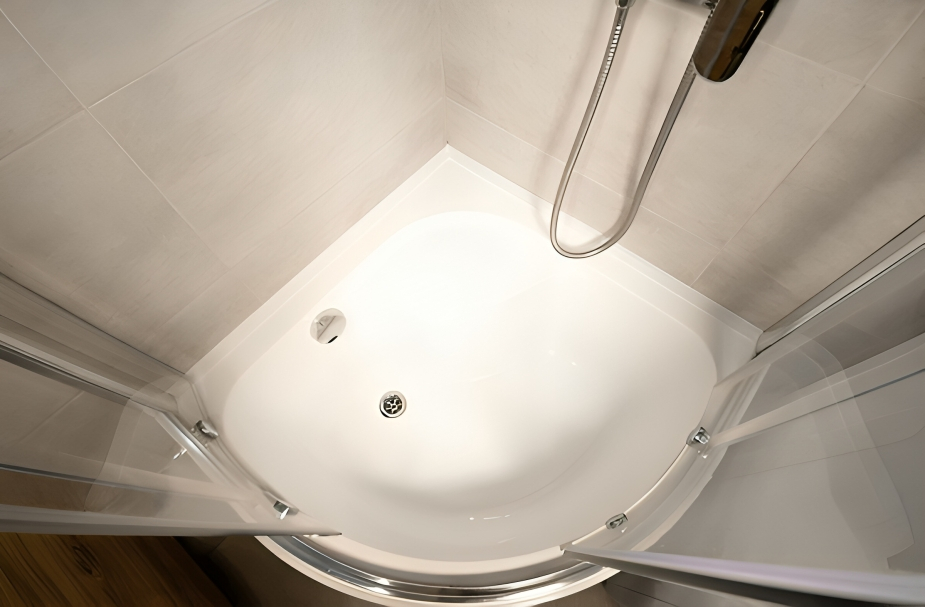
A corner bath sits diagonally across two walls, making use of an awkward corner that would otherwise go to waste. They work well in small bathrooms or those with an unusual layout.
Freestanding baths
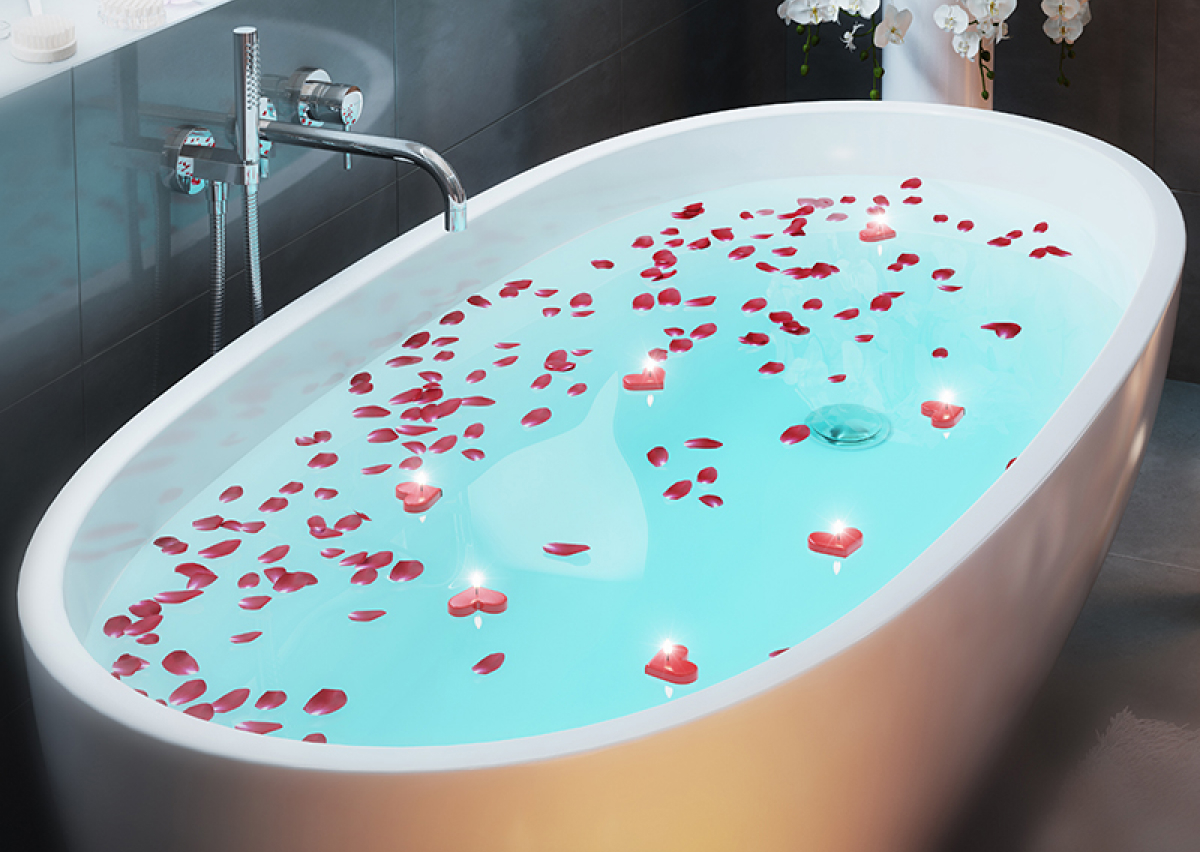
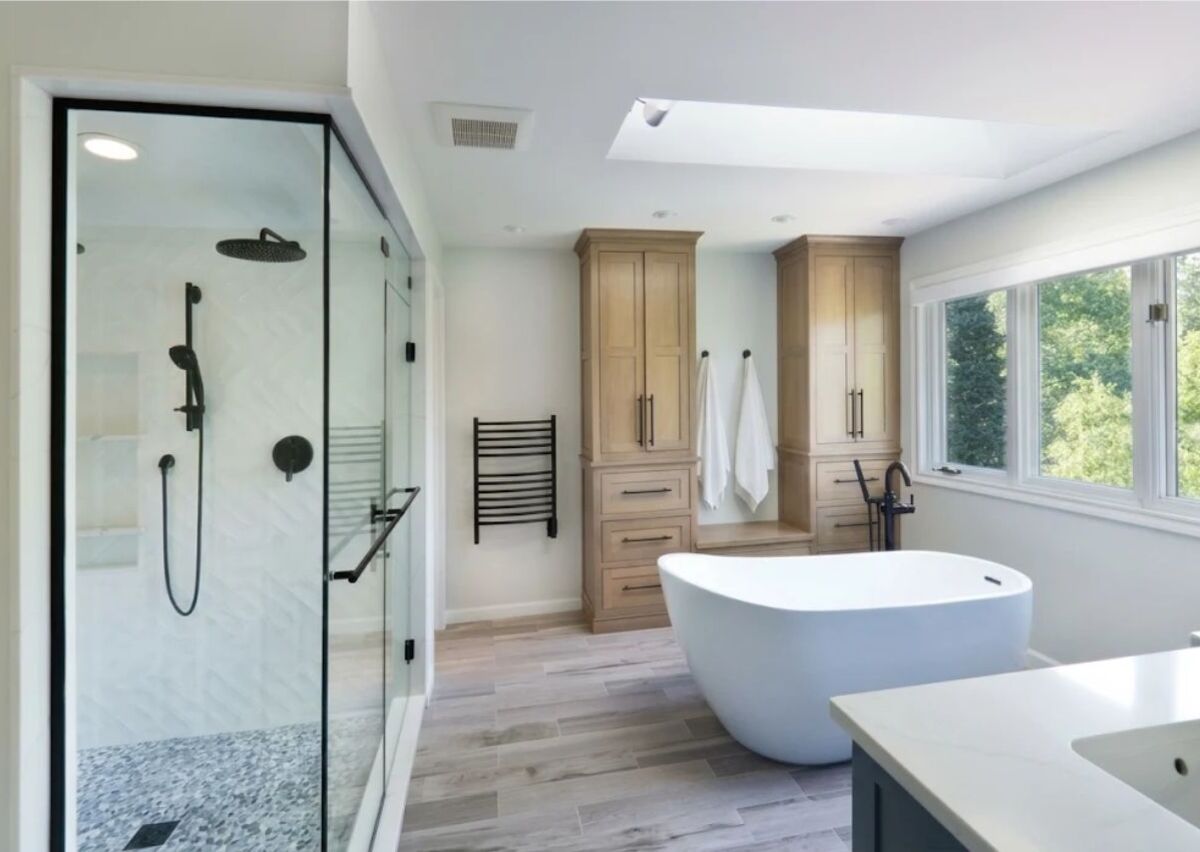
Freestanding baths stand clear of the walls rather than being boxed in, which makes them a centrepiece rather than a fitted fixture. Classic roll-top, slipper and modern oval designs all fall under this category. They generally need more floor space and exposed or boxed-in pipework, so they suit larger bathrooms best.
Whirlpool and spa baths
Whirlpool baths, sometimes called spa baths, are fitted with water or air jets that create a massaging effect. They're available in straight, corner and freestanding designs.
Walk-in baths
Walk-in baths have a watertight door built into the side, so you can step in rather than climb over a high side wall. They're designed with accessibility in mind, often pairing a low entry threshold with a built-in seat and grab rail.
Bath shapes
Shape has a big impact on how a bath feels to use and how much floor space it takes up. Here are the different bath shapes worth knowing before you measure up.
Straight or rectangular
A straight, rectangular shape is the simplest and most space-efficient option, fitting neatly into a standard alcove. It's the shape behind most single and double-ended baths and gives the most bathing length for a given footprint.
L- and P-shaped
L-shaped and P-shaped baths are wider at one end for a full standing shower, keeping bathing length at the other. L-shapes suit straight walls; P-shapes curve to match a screen and keep water in.
Corner
A corner-shaped bath is roughly diamond or curved-triangle in profile, fitting into the meeting point of two walls. It's chosen for the floor space it frees up elsewhere in the room rather than for bathing length, since the diagonal placement uses less of the tub's total size for actual soaking room.
Round and oval
Round and oval baths break away from straight edges entirely, usually as part of a freestanding design. The curved sides create a sculptural look, though they take up more floor area for the same bathing capacity as a straight tub.
Square
A square-cornered bath uses sharp, defined edges rather than the softer curves seen on oval or slipper designs, giving a clean, architectural look that suits contemporary bathrooms.
Slipper and roll-top
Slipper and roll-top shapes are traditional freestanding profiles, with one end raised higher than the other for a reclined bathing position. Roll-top baths typically stand on ball-and-claw or bracket feet, giving a period feel that suits classic bathroom schemes.
Bath materials
The material a bath is made from affects how it feels underfoot, how long it lasts and how much upkeep it needs. Here's a rundown of the main types of bath material you'll come across.
-
Acrylic: lightweight, warm to the touch and the most widely used bath material in the UK. It's easy to repair if scratched and suits most bathroom styles.
-
MDF: used for bath panels rather than the tub itself, MDF gives a solid, substantial feel and opens up colour options beyond plain white. Our MDF bath panels come in white and grey gloss finishes.
-
Steel or enamel: a steel shell coated in enamel offers a durable, glossy finish that retains heat better than acrylic, though the surface can chip if knocked hard.
-
Cast iron: extremely heavy and hard-wearing, cast iron holds heat longer than almost any other material, but can weigh well over 100kg, so floor strength needs checking first.
-
Stone resin: a composite of crushed stone and resin, this material feels solid and warm underfoot and resists chips and scratches well, usually at a higher price point.
-
Fibreglass: the lightest and most affordable option, fibreglass is easy to install but tends to wear faster than acrylic or steel over time.
Bath styles
Beyond shape and material, style is what ties a bath into the rest of the room. Whether you're after something classic or contemporary, these are the main bathtub styles to consider.
-
Traditional: roll-top or slipper baths on feet, often paired with classic taps and traditional bathroom furniture for a period look.
-
Contemporary: clean-lined, straight or square-edged baths that suit modern bathroom furniture and minimal hardware.
-
Minimalist: simple tubs with no visible feet or ornamentation, letting the shape do the talking rather than added detail.
-
Spa-inspired: deeper soaking tubs and jetted styles aimed at relaxation rather than practicality, often set within a wider hotel-style bathroom scheme.
-
Statement freestanding: an oval or slipper tub placed away from the wall as a focal point, usually in bathrooms with room to spare.
Choosing the right type of bath comes down to matching the shape and style to your bathroom's size and how the space gets used day to day. For a closer look at sizing, budgeting and fitting, our bathtub buying guide walks through the next steps. Or explore our full range of bathtubs to find the right one for your space.