Post Contents [hide]
- How Much Heat Does a Bathroom Need to Stay Warm?
- How to Calculate Your Bathroom’s Heating Requirement
- Are Heated Towel Rails Better Than Traditional Radiators?
- How Radiator Materials Affect Bathroom Heating Efficiency
- Strategic Solutions for Different UK Bathrooms
- Summary Checklist: Is a Towel Rail Right for You?
- SumUp
- Frequently Asked Questions
Bathroom heating requirements are based on room volume and heat loss. When renovating a bathroom, most homeowners find themselves asking one crucial question. Can a heated towel rail replace a traditional radiator, or will you be left with a cold, damp room? The short answer is: Yes, a towel radiator can heat a bathroom. Specifically, ladder towel rails are most commonly used but success depends entirely on matching the unit's BTU (British Thermal Unit) output to the room's specific heat loss profile.
In this blog, we will break down the technicalities of heat output, material efficiency, and possibility of using a bathroom towel radiator as a heating solution.
How Much Heat Does a Bathroom Need to Stay Warm?
Before choosing a radiator based on its aesthetic appeal, you must understand how heat is measured. In the UK, the standard measurement is the BTU (British Thermal Unit).
How to Calculate Your Bathroom’s Heating Requirement
Every room has a "heat loss" value. It is the amount of energy required to maintain a comfortable temperature of approximately 21°C to 23°C. Here is how to calculate it for your bathroom.
Step 1. What is the volume of my bathroom? Simply find out the volume of the room by multiplying the length, width, and height of the room in metres (L x W x H).
Step 2. What wattage does my bathroom need? Now you can calculate the total wattage needed to heat the room. Simply multiply the volume by a factor of roughly 150–180 Watts per m3 to find the total wattage needed.’
Step 3. How does heat loss affect sizing? You will need to weigh the heat loss of the room. You will need to adjust the total wattage required based on the home’s architecture. Simply add +10% as these rooms receive less natural solar warmth. You will need to further add +15% to +20% if you have older windows, as glass is a poor insulator. If more than two walls face the outside, your heat loss will be significantly higher.
*It is important to note here that a critical mistake many homeowners make is calculating the BTU of an empty radiator. Once you drape a thick, damp bath towel over the rails, you are effectively insulating the heater. This can reduce the heat emitted into the air by 15% to 20%. If you plan to keep the rail covered most of the time, you must buy a unit with a higher BTU than your calculation suggests.
Are Heated Towel Rails Better Than Traditional Radiators?
Yes, heated towel rails are better than traditional radiators for bathrooms if comfort and practicality matter. They keep towels warm and dry, reduce dampness, and provide enough heat for small to medium bathrooms.
However, if your bathroom is colder and larger, a traditional radiator may be a better solution due to better heat output. If you are confused whether to choose a heated towel rail or a traditional radiator, follow our guide to calculate BTU your room will need to heat and choose the towel radiator accordingly.
Let us have a look at the similarities and differences between these two options. Towel rails and standard radiators are designed for different primary functions.
-
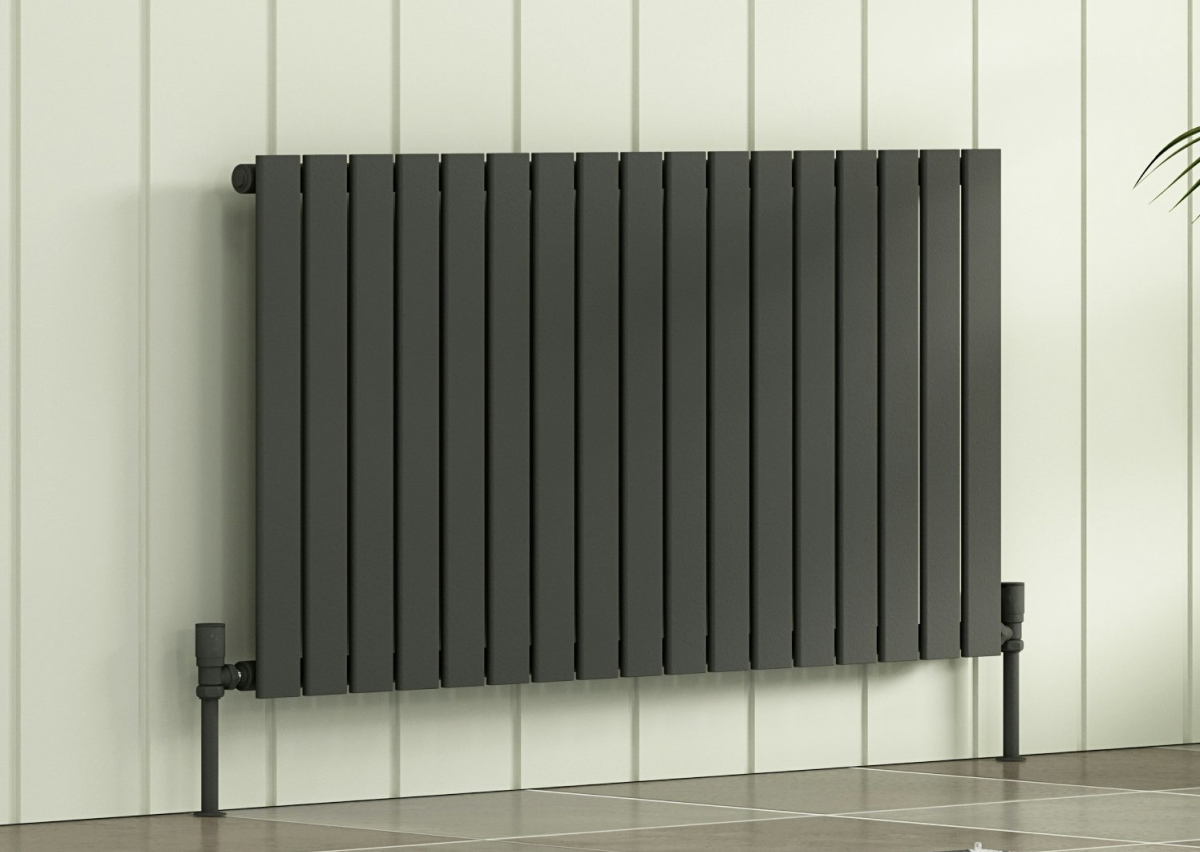
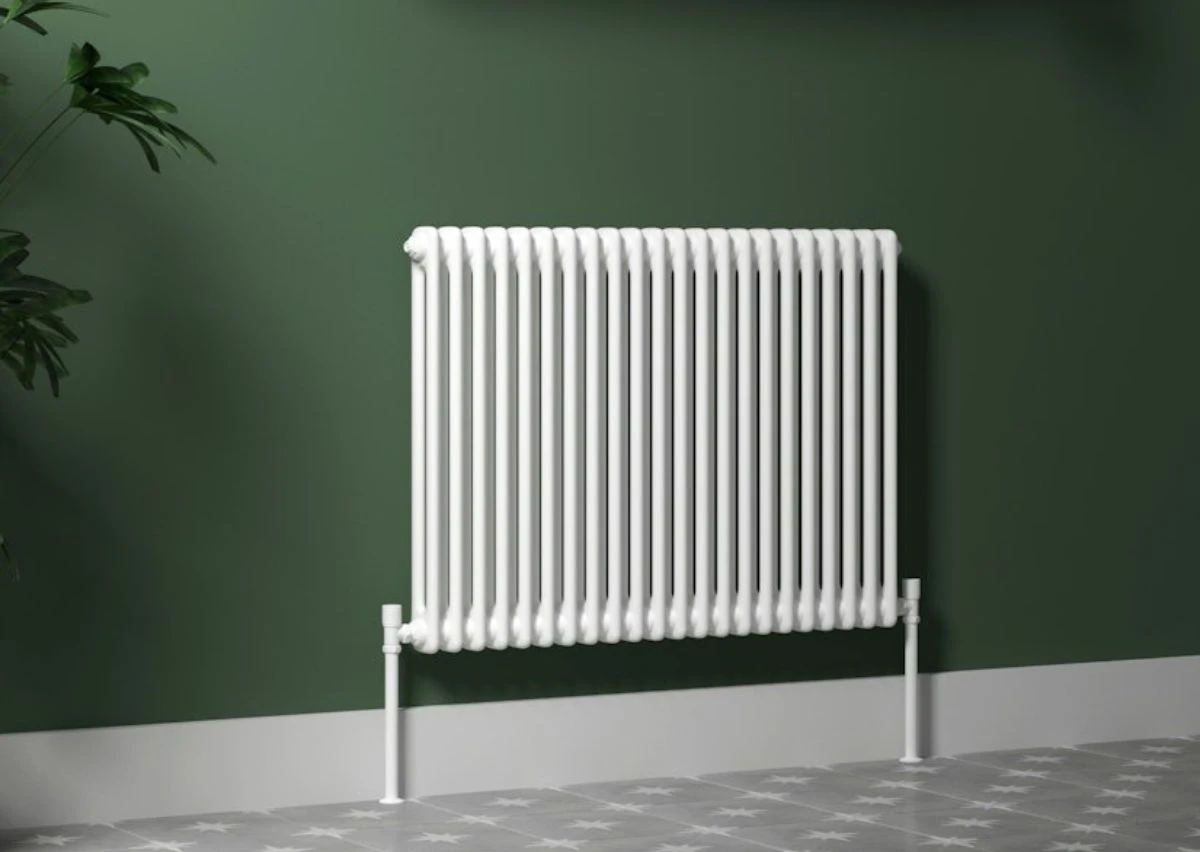
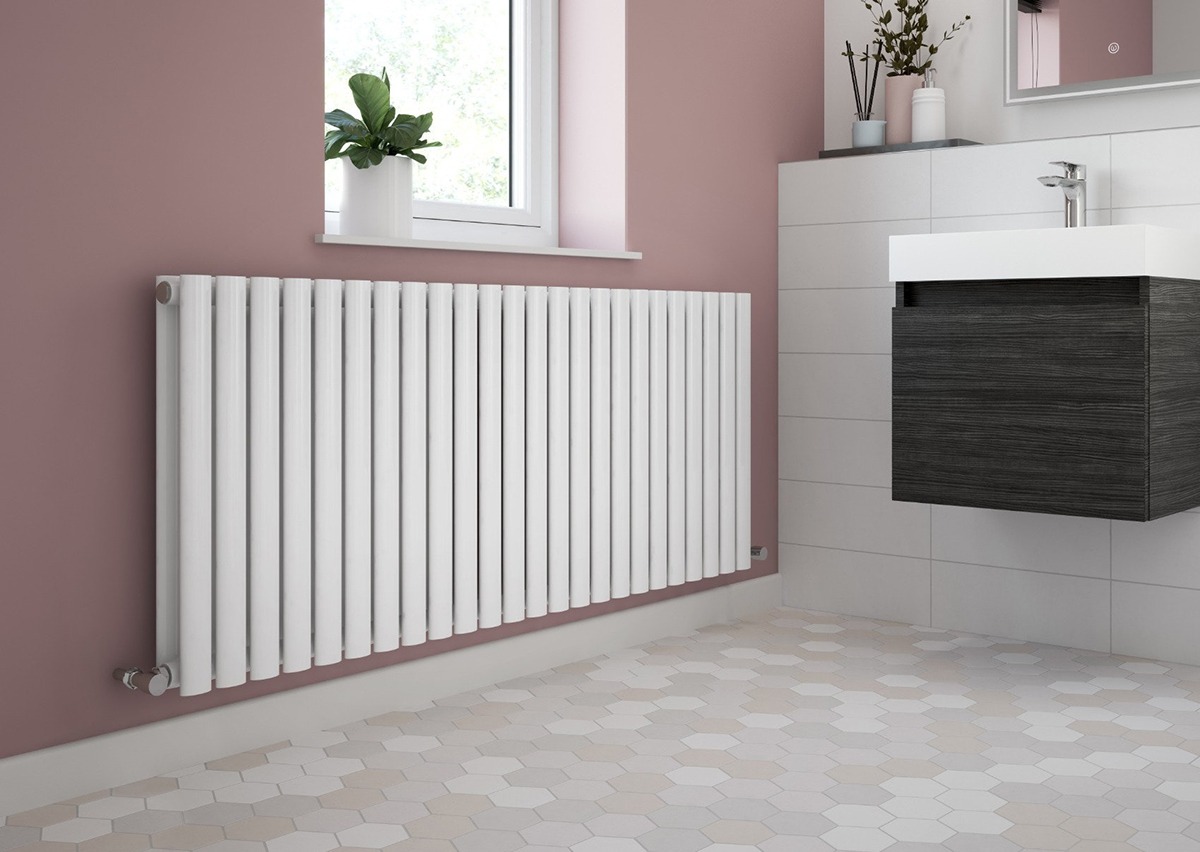
Standard Radiators: These use "convector fins" (the zig-zag metal between the panels) to create a convection current that pulls cold air from the floor, heats it, and pushes it toward the ceiling. A standard radiator can easily output 1,500 to 3,000 Watts.
-
Towel Radiators: These are primarily "radiant" heaters. They have a lower surface area and are meant to dry fabrics through direct contact. They typically output between 200 and 800 Watts.
How Radiator Materials Affect Bathroom Heating Efficiency
In the UK, chrome is the most popular finish for towel rails, but it is technically the least efficient.
-
Chrome Finishes: In case you are looking for high efficiency, chrome might not be the right choice as it may emit 20% to 30% less heat than a painted one of the same size.
-
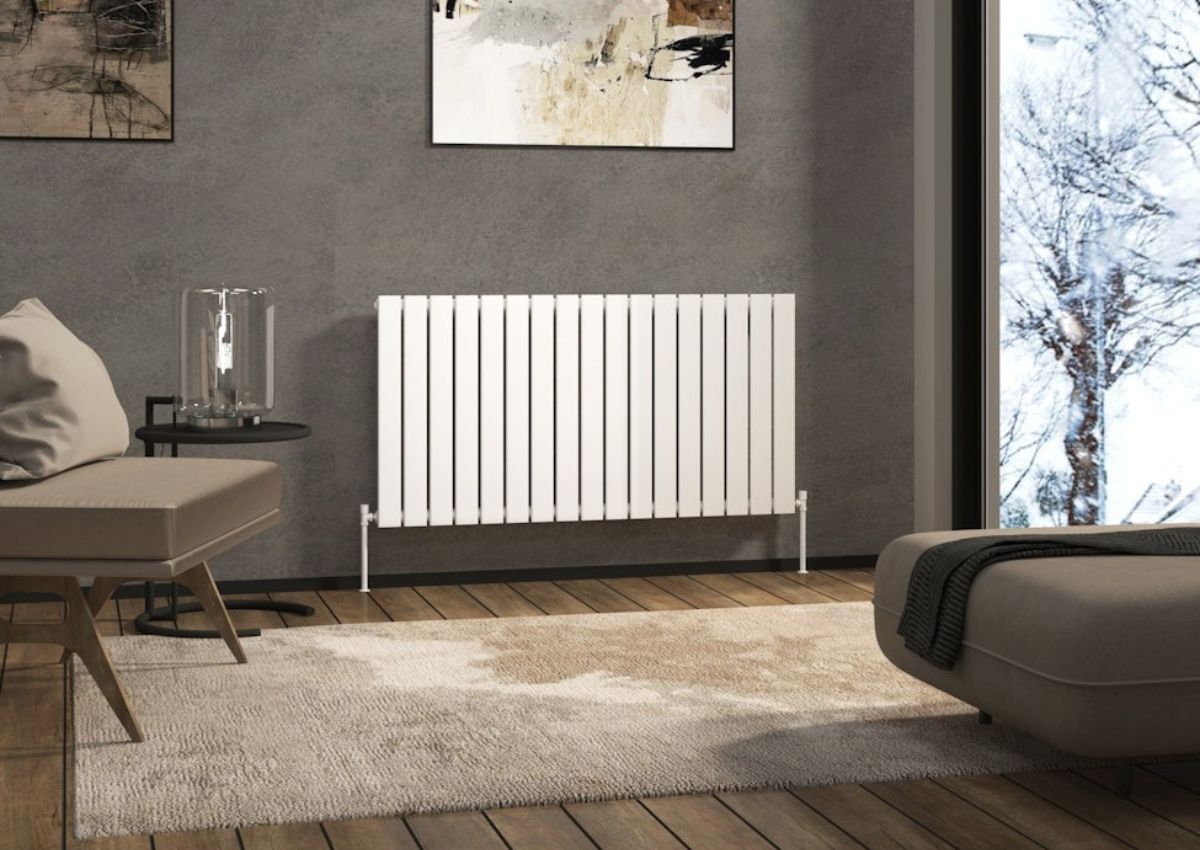
Painted Finishes (White or Anthracite): These have a higher "emissivity" rate, allowing heat to escape into the room more freely.
-
Aluminium: This is the gold standard for UK bathroom heating. It is a superconductor that heats up almost instantly and is far more efficient at warming a room than mild steel.
Strategic Solutions for Different UK Bathrooms
Bathrooms vary in size and layout; therefore, your heating strategy should be tailored accordingly.
Heating The Small En-suite or Cloakroom
A single towel radiator is usually sufficient for small bathrooms. In a compact, internal room, especially those without windows, a tall, vertical towel rail is usually perfectly sufficient. Because the cubic volume of air is low, the rail will eventually warm the air to a comfortable level while keeping your towels dry.
Large Family Bathrooms: The Hybrid Approach
Large bathrooms often require more than one heat source.
If you have a large bathroom with high ceilings (common in Victorian or Edwardian UK homes), a single towel rail will likely leave you with "cold spots". The professional recommendation is a hybrid setup.
-
Install a High-Output Column Radiator or Underfloor Heating to provide the primary "ambient" warmth for the room.
-
Install a smaller, secondary Heated Towel Rail purely for the luxury of warm towels.
The "Dual-Fuel" Revolution
Dual-fuel towel radiators offer year-round efficiency.
One of the best ways to manage UK energy bills is to install a Dual-Fuel bathroom radiator. These units are connected to your central heating (gas boiler) for the winter months, but also feature an internal electric heating element. This allows you to dry towels in the summer without turning on the whole house's heating system.
Summary Checklist: Is a Towel Rail Right for You?
To decide if a towel radiator will give off enough warmth, ask yourself these three questions:
-
Does the BTU output match my room's volume? (Always check the product specification for the "Delta T50" rating.
-
What is the finish? (If you need a lot of heat, choose Anthracite or White over Chrome for better efficiency)
-
Will it be covered? (If it will always be draped in towels, buy a rail that is 25% larger than your calculation suggests.
SumUp
A towel radiator is a fantastic addition to any bathroom, but it is not a 'one size fits all' solution. To determine if it will provide sufficient heat for the space, you must perform a proper BTU calculation. This should consider the room layout and insulation status, as well as your choice of material and how you plan to use it (e.g., whether it will be covered with damp towels most of the time).
Frequently Asked Questions
Do heated towel rails increase electricity bills?
Heated towel rails can increase electricity bills slightly, but the impact is usually minimal. Most models are low wattage and, when used for a few hours a day rather than continuously, remain cost-effective.
Do thermostatic controls improve towel rail efficiency?
Yes, thermostatic controls significantly improve efficiency by maintaining a consistent temperature. They prevent the towel rail from overheating and reduce unnecessary energy consumption.
Is a dual fuel towel rail more energy efficient?
Dual fuel towel rails are more efficient because they combine central heating and electric operation. This allows you to use the most economical heat source depending on the season and usage.
How long should a heated towel rail stay on for maximum efficiency?
For best efficiency, a heated towel rail should be switched on for around 2–4 hours per day. Using timers ensures towels dry properly without wasting electricity.
Are heated towel rails efficient for underfloor-heated bathrooms?
Yes, heated towel rails work efficiently alongside underfloor heating. They provide fast towel drying and additional warmth without relying on the main heating system.
What is the best finish for bathroom towel radiators in hard-water areas?
Powder-coated and stainless steel finishes perform best in hard-water areas. They resist corrosion, limescale buildup, and water staining better than chrome finishes.
Are towel radiators more suitable for modern bathrooms than radiators?
Yes, towel radiators are better suited to modern bathrooms due to their sleek, vertical designs. They save space while offering both heating and towel-drying functionality.
Do traditional radiators dry towels as well as towel rails?
No, traditional radiators are not designed for towel drying and often dry towels unevenly. Towel rails are specifically built to circulate heat around towels for faster, more hygienic drying.